



Are you looking for a macular pucker doctor in Newport Beach, CA?
At Retina Associates of Orange County, we are board-certified macular pucker providers with 23 years of clinical experience in Newport Beach, CA.
If a macular pucker is distorting your central vision, a retina surgeon can determine whether the membrane needs to be removed or can safely be monitored. Fellowship training in vitreoretinal surgery is standard for every Newport Beach, CA macular pucker doctor in our practice.
Our physicians trained at programs that include Bascom Palmer Eye Institute, Moorfields Eye Hospital, and Weill Cornell Medical College, and four of the five are board-certified in ophthalmology. Schedule an evaluation to learn whether your pucker calls for observation or surgery.
Macular Pucker Doctor Newport Beach, CA
A macular pucker is a thin layer of scar tissue that forms over the macula, the part of the retina responsible for detailed central vision. As the membrane contracts, it wrinkles the retina beneath it. Reading becomes more difficult. Door frames, window blinds, and lines of text may appear wavy in the affected eye. A macular pucker doctor is a retina specialist who measures these changes, decides whether they justify surgery, and performs the operation when they do.
The National Eye Institute lists age as the leading risk factor. In Newport Beach, Census Bureau figures show that 24.2 percent of the city’s roughly 82,000 residents are 65 or older. Most puckers involve only one eye, and some people don’t notice the distortion until they cover their healthier eye and read with the affected one.
Macular Pucker Services We Offer in Newport Beach
Not every macular pucker needs an operation. Many stay stable for years, and our first task is to determine whether yours is one of them.
- OCT imaging. Cross-sectional scans show how thick the membrane is and how much it has distorted the retinal layers beneath it. Comparing scans over several months reveals whether the pucker is progressing.
- Observation. Mild puckers that cause little distortion are usually watched. An updated glasses prescription is sometimes enough to keep reading comfortable, and we’ll repeat imaging to confirm the membrane isn’t contracting.
- Vitrectomy with membrane peeling. When distortion interferes with reading, driving, or work, the vitreous gel is removed and the membrane is lifted off the retina with fine instruments. It’s typically an outpatient procedure.
- Internal limiting membrane peeling. In selected cases, we also remove the internal limiting membrane, the thin layer directly beneath the pucker, which may lower the chance of the membrane returning.
- Macular edema. Swelling of the macula can accompany a pucker or develop after surgery. Medicated eye drops or injections are used to reduce it.
- Retinal tear. The same vitreous changes that lead to a pucker can also tear the retina. A tear found during your exam is usually sealed with laser before it can progress to a detachment.
- Retinal vein occlusion. A blocked retinal vein can trigger a secondary pucker, so treating the occlusion becomes part of managing the membrane.
- Diabetic retinopathy. Diabetes is another source of secondary puckers. The underlying retinopathy often needs treatment of its own.
Why Choose Retina Associates of Orange County for Macular Pucker Treatment in Newport Beach, CA?
Surgeons Active in Retina Education and Research
Dr. Mrinali Gupta sits on the Board of Directors of the American Society of Retina Specialists and serves as Vice President of Education for the Vit-Buckle Society, an international professional society. More than 80 textbook chapters and research publications in retina carry her name. Her training began with medical school at Duke University, continued with residency at Harvard Medical School and Massachusetts Eye and Ear Infirmary, and finished with a fellowship at Weill Cornell Medical College. The Ronald G. Michels Fellowship Foundation Award is among her honors.
After earning his medical degree at the University of North Carolina at Chapel Hill, Dr. Charles W.G. Eifrig completed both his residency and fellowship at Bascom Palmer Eye Institute in Miami. Two ophthalmology journals rely on him as a manuscript reviewer, and he serves on the panel reviewer committee for Ophthalmic Surgery, Lasers and Imaging. His research includes numerous journal publications and participation in a range of clinical trials. He’s a member of the American College of Surgeons.
Our Newport Beach Office
Appointments take place at our Newport Beach office on San Miguel Drive. Patients who need a retina specialist in Newport Beach, CA for other conditions, from macular degeneration to retinal detachment, are treated at the same location.
Understanding Macular Pucker Care
Conditions We Treat and Treatment Options
Macular puckers fall into two broad groups. Most are idiopathic, meaning they develop without a separate eye disease as the vitreous gel pulls away from the retina with age. Others are secondary. These follow an injury, an inflammatory condition, or another retinal problem, and they often require treatment of that cause as well. When surgery is needed, both groups are treated with the same operation.
- Idiopathic epiretinal membrane. This is the most common form. It usually follows a posterior vitreous detachment, the normal separation of the vitreous from the retina.
- Post-traumatic pucker. Blunt injuries, including eye injuries after accidents, can damage the retina and prompt a membrane to form.
- Membranes after retinal surgery or laser. A membrane sometimes develops after retinal detachment repair or laser treatment of the retina, and it’s usually removed the same way as an idiopathic one.
- Vascular-related pucker. Diabetic retinopathy and blocked retinal veins can both lead to membrane growth over the macula.
- Uveitis-related pucker. Inflammation inside the eye raises the risk. We control the inflammation before planning any surgery.
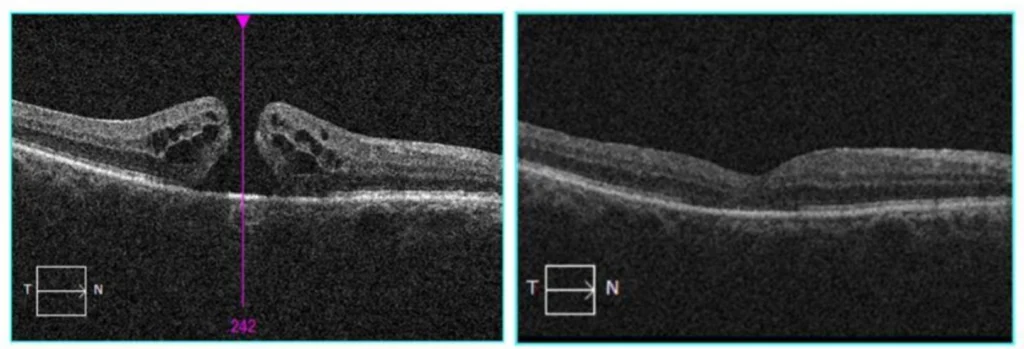
- Macular hole. Rarely, the pull of a pucker opens a small hole in the center of the macula. Repair involves vitrectomy and a gas bubble that holds the edges of the hole together while it heals, and patients may be asked to keep their head in a specific position for several days afterward.
What Should You Expect from Macular Pucker Surgery?
- Before surgery, your physician reviews your OCT scans with you and explains how much improvement is realistic for your eye.
- Your eye surgeon performs the vitrectomy under local anesthesia with sedation. The eye is numbed, and most patients return home the same day.
- You’ll wear a protective shield over the eye the first night, and your first postoperative visit usually takes place the next day.
- Vision tends to improve gradually rather than all at once. Some distortion may remain even after a successful operation.
- If you haven’t had cataract surgery, a cataract often develops in the operated eye within a few years of vitrectomy.
What Is the Typical Treatment Timeline?
- The first visit includes a dilated exam and OCT imaging that serve as a baseline, along with a discussion of how much the distortion affects your daily routine.
- Puckers that are being observed are rechecked at intervals your physician sets, often several months apart.
- After surgery, follow-up visits are scheduled the next day and again over the following weeks.
- Most of the visual improvement happens over several months.
- Cataract surgery may be planned later if a cataract forms.
These timelines vary with the cause of the pucker, its severity, and how each eye heals.
What Should You Bring to Your First Visit?
- Bring your insurance card and photo identification.
- Wear the glasses you currently use, since they help us separate prescription problems from retinal distortion.
- A medication list should note any blood thinners you take.
- Records of earlier eye surgery, laser treatment, or retinal imaging help us track changes.
Your pupils will be dilated during the exam. Because driving isn’t safe until the drops wear off, please arrange a ride home.
What Are Some Important California Macular Pucker Resources?
Licensing records and federal health information can help you confirm a physician’s standing and read more about retinal conditions.
- Medical licensing. The Medical Board of California oversees physician licensing in the state, with a public license search and a complaint process for patients.
- Plain-language reading. MedlinePlus, published by the National Library of Medicine, has a retinal disorders page that covers macular pucker alongside other conditions of the retina.
- Condition overview. The National Eye Institute’s patient page on macular pucker describes symptoms, risk factors, and the two surgical approaches.
These sources provide general background. Decisions about treatment should be made with a retina physician who has examined your eye.
Contact Retina Associates of Orange County
Contact us to arrange an evaluation with a macular pucker doctor in Newport Beach. The first appointment centers on measuring how much the membrane has changed your retina and how much it affects daily tasks such as reading and driving. Your physician will then explain whether watching the pucker or removing it makes more sense for you. If surgery is recommended, we’ll also talk through the recovery. That conversation covers the likelihood of a cataract forming and how much distortion may remain. You’ll be able to weigh the decision with complete information.
Epiretinal Membrane Or Macular Pucker Treatment
Macular pucker affects approximately 10 percent of people, particularly men and women over the age of 50. Based in the center of your retina, the macula is responsible for the part of your vision that allows you to see straight ahead. As you read the text on this page, you are using your macula. When the retinal surface forms an extra layer of tissue and contracts, distorting the retina, it is known as a macular pucker. They look like a piece of scotch tape and can distort the central vision. If you start to notice this, you should see a doctor for macular pucker as soon as possible.
Our Macular Pucker Doctor Newport Beach are here to help you. The Retina Associates of Orange County are licensed and certified ophthalmologists in California. Our multilingual staff (Tagalog, Korean, Chinese, Vietnamese, English, Farsi, and Spanish) helps clients of all ages and from different backgrounds. We see a broad range of eye problems including macular pucker. Guided by our knowledge, experience, and passion to enable people to improve their vision, we have a built a solid reputation. If you are in Newport Beach, macular pucker consultations are just a phone call away.
Understanding the Macula
The retina is the light-sensing layer of cells that lines the inner wall of the back of the eye that allows one to see fine detail. If you think of your eye like a camera, the retina and macula are the film of the camera. There are many conditions that can damage the macula.
An epiretinal membrane is a condition with many names: macular pucker, pre-retinal fibrosis, cellophane maculopathy, and surface wrinkle retinopathy, among others. All of these allude to an ailment that causes blurred and/or distorted central vision.
Macular Puckers vs Macular Holes
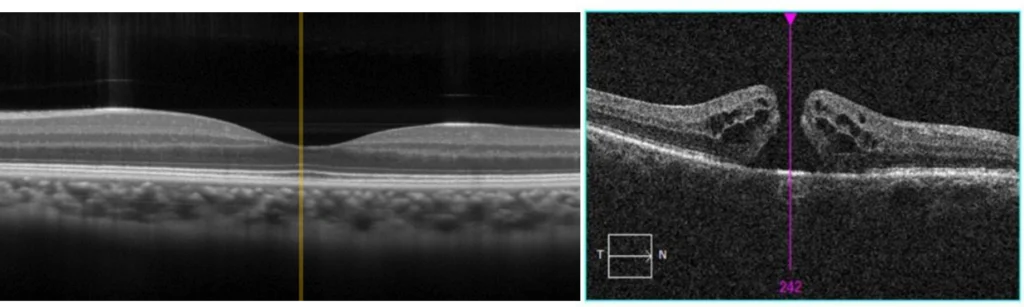
A macular pucker and macular hole are different conditions of the eye. Both result from a shrinking vitreous pulling on the retina. When this pulling leads to small microscopic damage, the retina can naturally heal itself, but the scar tissue that results can be considered a macular pucker. If the shrinking vitreous pulls on the retina too hard, a tear can result. Known as a macular hole, this is a more serious condition. Both issues present similar symptoms which is why you should see an ophthalmologist for an accurate diagnosis and proper treatment. Our Macular Pucker Doctor Newport Beach can help you determine if you are suffering from a macular pucker or a macular hole.
Common Symptoms of Macular Pucker
As a certified eye doctor who provides Newport Beach macular pucker treatment services can explain, there are several symptoms to look out for. Certain people are more prone to developing macular pucker later in their life. People can develop a macular pucker, or build up of tissue, due to a number of reasons, such as diabetes or even a serious personal injury accident. While some people experience no symptoms at all, others have one or more serious symptoms that can greatly impede their vision. Being aware of the common symptoms of macular pucker can help you seek treatment sooner once you notice them. If you experience two or more of the following symptoms and they have persisted for several days, you may want to see an eye doctor right away.
Blurry Vision
The macula is the part of the area that allows you to perceive objects with sharp detail. Because of the build-up of tissue that develops on the macula, the macula becomes obstructed. This can cause your vision to become blurry. The severity of blurry vision as a result of macular pucker can range from slight vision loss to severe vision loss, depending on each individual. However, for some people with mild blurry vision, they may not need to go through extensive treatment. If you feel like you are having difficulty viewing objects or you are struggling to read small text or make out finer details, it could be an indicator that you have a macular pucker.
Wavy Lines
Another common symptom of a macular pucker are wavy lines. Many people who have macular pucker notice that straight lines are wavy because they are distorted. For example, if they view a barcode, they may see that the black lines are way rather than straight. Because the macula has an excess of tissue, it affects the brain’s ability to process images and visual cues. Individuals with macular pucker have their central vision affected, making it hard to put things in focus. This distortion may also be even more noticeable at night, such as when a person is driving their car and they view the reflection of lights.
Gray Spots
People with macular pucker also commonly report the sudden onset of gray spots or blind spots. This symptom can greatly affect vision, and can make it unsafe to do essential activities such as driving, using tools, or operating machinery. If you feel like you are seeing gray spots that are obstructing your vision, it could be a sign of a macular pucker. A gray spot develops when there is a gray or cloudy portion on the middle of the eye surface. It can look like multiple small shadowy blobs that come and go. If the gray spots continue to bother your vision, you may want to speak to an experienced Newport Beach macular pucker specialist.
A macular pucker can develop in one or both eyes, so if you notice anything wrong with your vision at all and the issues have persisted for several days, you may want to see an eye doctor for an exam right away. To learn more about Newport Beach macular pucker services available near you, schedule a consultation with a trusted eye doctor right away.
Risk Factors For Macular Pucker
Understanding the risk factors associated with macular pucker is vital if you want to maintain healthy vision. At Retina Associates of Orange County, our award-winning ophthalmologists leverage their extensive training and experience to provide personalized patient care with cutting-edge treatment options. Now, we’re ready to help you. Read on to learn more about common risk factors of macular pucker, and contact us today to get started on your treatment.
Age
Age is a significant factor, with most cases of macular pucker occurring in individuals over the age of 50. As we age, natural changes in the eye can lead to the formation of a thin film over the macula, affecting vision quality.
Diabetic Retinopathy
Individuals with diabetic retinopathy are at a higher risk of developing macular pucker. High blood sugar levels can damage blood vessels in the retina, potentially leading to the formation of scar tissue and subsequent visual impairment.
Eye Surgery
Previous eye surgeries, particularly those involving the vitreous or retina, can increase the risk of developing macular pucker. Surgical procedures can lead to changes in the eye’s internal structures, sometimes resulting in scar tissue development.
Trauma To The Eye
Any form of trauma to the eye, such as a blunt force injury, can precipitate the formation of scar tissue on the macula. This scar tissue can contract and cause the retina to wrinkle or pucker, impacting vision.
High Myopia
Highly nearsighted individuals are more likely to develop conditions related to the vitreous and retina, including macular pucker. Nearsightedness can cause stretching and thinning of the retina, making it more susceptible to abnormalities.
Vascular Conditions
Certain vascular conditions that affect blood flow, such as hypertension and vascular blockages, can also increase the risk of this condition. Poor circulation can lead to the accumulation of fluid and the formation of membranes that can disrupt the normal retinal structure.
Inflammatory Eye Conditions
Inflammation within the eye, such as from uveitis or posterior vitreous detachment, can contribute to the formation of epiretinal membranes. Chronic inflammation can lead to the proliferation of cells that form scar tissue on the retina.
Lifestyle Factors
Lifestyle factors such as smoking can contribute to overall vascular health and may indirectly increase the risk of developing macular pucker. Maintaining a healthy lifestyle with regular exercise and a balanced diet can help reduce this risk.
Recognizing these risk factors can help in early detection and management of macular pucker. Regular eye exams are crucial for those at higher risk due to age, underlying health conditions, or past eye traumas. If you experience any changes in your vision or fit into the high-risk categories, it’s important to seek professional advice.
Causes Of Macular Pucker
Most macular holes are due to abnormalities in the aging process of the eye, whereby tractional forces pull on the fovea at the center of the macula and allow a hole to develop. Macular holes may also occur in eyes after trauma.
The vitreous gel separates from the retina in nearly everyone at some point in his or her life. In some people, when the vitreous separates, it causes scar tissue to form over the macula. This extra tissue will often thicken and contract, causing an irregular surface of the macula layer.
Some patients are without symptoms, but as the macular pucker or epiretinal membrane thickens, patients will often describe wavy lines or distorted central vision. Blurred vision and/or difficulty reading may also be a symptom.
Diagnosing Macular Pucker
An ophthalmologist can examine your retina in order to diagnose an epiretinal membrane. Once the membrane is detected, there are two common photographic tests administered for assessing the extent of the damage to the underlying retina. These tests are fluorescein angiography (FA) and optical coherence tomography (OCT).
Fluorescein Angiography– in a in a fluorescein angiogram, patients are injected with sodium fluorescein dye through the veins in their hands or arms. Then the physician takes a series of photographs of the retina. The physician can use these photographs to evaluate the retinal layer, the layer beneath the retina and the retina’s blood vessels. The dye used in this process is not x-ray dye and no x-ray is taken. Rather, sodium fluorescein dye is a photographic dye that the patient will eventually eliminate from the body through urination. The dye may stain the patient’s skin yellow for up to 24 hours. The test is considered highly safe and effective. However, some patients may prove allergic to the dye. In this case, another kind of test, optical coherence tomography, may be administered.
Optical coherence tomography is a newer epiretinal membrane assessment in which light waves are bounced off the retina to obtain a cross section image. No dye is used in this exam. Rather, the light waves map the retina, acting similarly to sonar waves mapping images of the ocean floor.
Other Conditions of the Eye in Conjunction with Macular Pucker
When you visit Newport Beach macular pucker doctors, you may also be examined for additional diseases of the eye. Oftentimes, patients with macular pucker will have other eye problems including cataracts, macular edema, or retinal vein occlusion. If any of these issues are discovered, a treatment plan will be devised that includes each problem. Some can be addressed and treated simultaneously and others will need to be individually treated when the time is right. Your ophthalmologist can discuss all of your options during your eye appointments. Rest assured that when you are a patient of the Retina Associates of Orange County, you will be in good hands.
Treating Macular Pucker
The only way known to treat epiretinal membranes is to surgically remove them. Surgery is generally not necessary in cases where symptoms are mild. If both eyes are affected, strengthening one’s bifocals or using a magnifying glass may improve one’s near vision.
In more substantial cases, the membrane is removed in a procedure known as vitrectomy. This is generally an outpatient procedure in which local anesthesia is administered. Surgeons in this procedure use minute instruments to remove the vitreous humor from the eye’s central cavity and then remove the membrane that wrinkles the macula. After which, the macula should smooth out and symptoms will gradually be reduced. Most patients see an improvement in vision following this treatment. However, vision usually does not return to normal, and some visual distortion and reduced acuity often remain.
As with any surgery, there are risks. In vitrectomy surgery, the risks include infection, bleeding, torn or detached retina, inflammation, or affects to the blood vessels in the retina.
Contact Us Today For Treatment of Macular Pucker or Epiretinal Membrane
If you suspect you are suffering from visual distortion caused by epiretinal membranes, contact Retina Associates of Orange County. Our qualified retinal specialists can help restore your sight and/or prevent further vision loss.
Whether you are in Santa Ana, Laguna Hills, or Newport Beach macular pucker doctors can help you correct and restore your vision; call us at 949-706-3514 for a free consultation.


