
Call Us Today!
(949) 707-5125
Menu

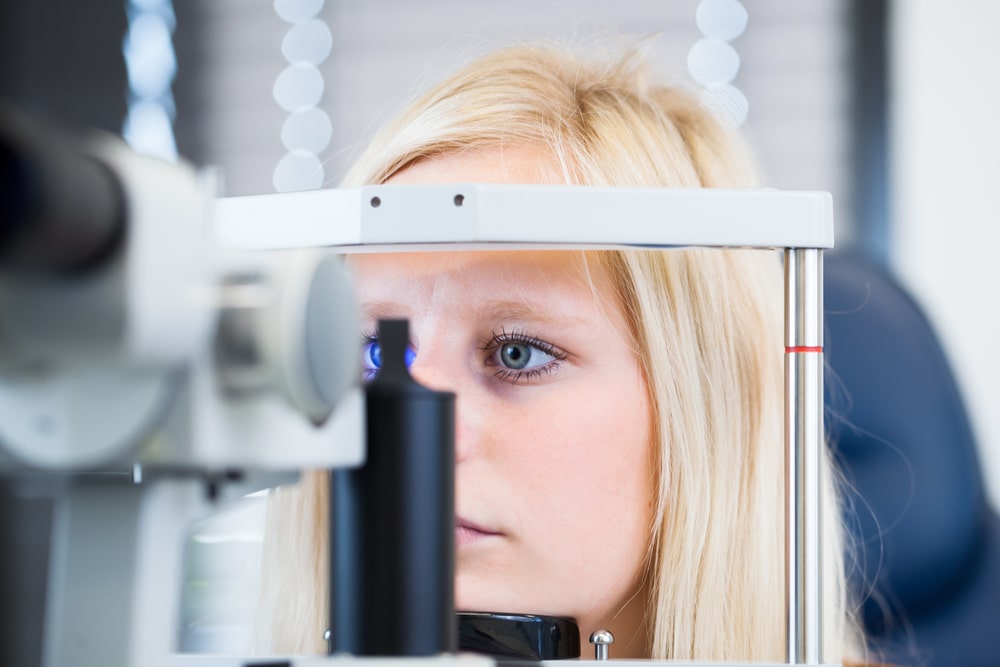
Are you looking for a retinal disease specialist in Orange County, CA? At Retina Associates of Orange County, we are board-certified retina providers with 23 years of clinical experience in California.
For many families, an inherited retinal disease diagnosis comes after months or years of unexplained vision changes. Night blindness in a teenager, peripheral vision narrowing in a young adult, or progressive central vision decline that glasses cannot correct can all point to a genetic condition affecting the retina. More than 260 genes are now linked to inherited retinal diseases, and identifying the specific mutation matters because it determines which treatments and clinical trials a patient may be eligible for. Our board-certified retina physicians evaluate, monitor, and manage inherited retinal conditions at four offices in Laguna Hills, Newport Beach, Santa Ana, and Huntington Beach. A California inherited retinal disease specialist can guide you from diagnosis through long-term management and connect you with emerging therapies.
Inherited retinal diseases, sometimes called retinal dystrophies, are a group of genetic disorders that cause the photoreceptor cells in the retina to deteriorate over time. The retina’s rods and cones, the cells responsible for low-light and color vision respectively, gradually stop functioning. The result is progressive vision loss that varies in speed and pattern depending on the specific condition and the gene involved.
These conditions require a retina specialist, not a general ophthalmologist. The diagnostic workup often involves advanced imaging, electrophysiology testing, and coordination with genetic testing laboratories. Our California physicians bring that level of subspecialty focus to each inherited retinal disease evaluation.
Inherited retinal diseases are not a single condition. They encompass dozens of distinct diagnoses, each with its own genetic basis, pattern of vision loss, and treatment considerations. Our retina specialists offer the following services to patients across California.
Managing inherited retinal diseases requires more than monitoring decline. It requires staying connected to a treatment landscape that is changing faster than in almost any other area of ophthalmology. Dr. John C. Hwang is a board-certified retina specialist who evaluates patients with retinitis pigmentosa, Stargardt disease, and other hereditary conditions. Dr. Mrinali Gupta brings the same fellowship-level training and manages a broad spectrum of retinal diseases in California. Dr. Desmond McGuire completed his retina fellowship at the Shiley Eye Center at UC San Diego after training at Columbia University and St. Vincent’s Hospital in New York. All three are members of the American Society of Retina Specialists and the American Academy of Ophthalmology.
The practice operates a clinical trial network focused on retinal therapies. For patients with inherited conditions, this is particularly meaningful because gene therapy, stem cell research, and novel pharmacologic approaches are being studied in clinical trials right now. Access to those trials can mean access to treatments years before they reach the broader market.
Inherited retinal diseases share a common feature: genetic mutations that disrupt the normal function of retinal cells. But the clinical picture varies significantly depending on which gene is affected and which cell type is primarily involved.
Many of these conditions share overlapping warning signs in their early stages. Accurate genetic diagnosis prevents misclassification and directs patients toward the right monitoring and treatment pathways.
Your first visit will include a dilated fundus exam, OCT imaging, and a detailed personal and family vision history. Your physician will look for characteristic retinal changes such as pigmentary deposits, macular atrophy, or photoreceptor layer thinning.
Electroretinography may be performed to measure how well your rods and cones respond to light stimuli. This test can detect dysfunction before structural damage is visible on imaging.
If an inherited condition is suspected, your physician will recommend genetic testing. A blood draw or saliva sample is sent to a specialized laboratory, and results typically take several weeks. Once the genetic mutation is identified, your physician will discuss what it means for your prognosis, your treatment options, and your family members who may carry the same gene.
Follow-up care is ongoing. Even in the absence of a current treatment, regular monitoring tracks disease progression and keeps you informed about new therapies as they become available.
At the initial evaluation, your physician will establish a baseline for visual acuity, visual field, OCT measurements, and ERG responses. Follow-up visits are typically scheduled every six to twelve months, though this varies by condition. Rapidly progressing diseases require more frequent monitoring.
Genetic test results, once available, are reviewed in a dedicated appointment where your physician explains the mutation type, inheritance pattern, and implications for treatment eligibility. For patients eligible for gene therapy or a clinical trial, referral and enrollment can begin as soon as the genetic diagnosis is confirmed.
There is no fixed endpoint for monitoring. Inherited retinal diseases are lifelong conditions, and ongoing evaluation means you receive new treatments as they become available and that changes in your retina are tracked over time.
Plan for a longer visit than a typical eye exam. Inherited retinal disease evaluations involve multiple tests, and your pupils will be dilated.
Patients and families in California can access reliable information on inherited retinal conditions through the following public sources.
These informational resources do not replace an in-person evaluation with a qualified retina physician.
An inherited retinal disease diagnosis affects more than one person. It carries implications for siblings, children, and future generations. Genetic testing is the single most important step a patient can take, because it defines the specific condition, determines eligibility for gene therapy and clinical trials, and gives family members the information they need to make informed decisions about their own screening.
If you or a family member has been told you may have a genetic retinal condition, or if you are experiencing unexplained progressive vision loss, our retina specialists can evaluate you and coordinate the testing needed to reach a clear diagnosis. Contact us today to schedule an inherited retinal disease evaluation with a board-certified retina specialist in California.
We are dedicated to delivering compassionate, expert care to patients facing sight-threatening retinal conditions.


