



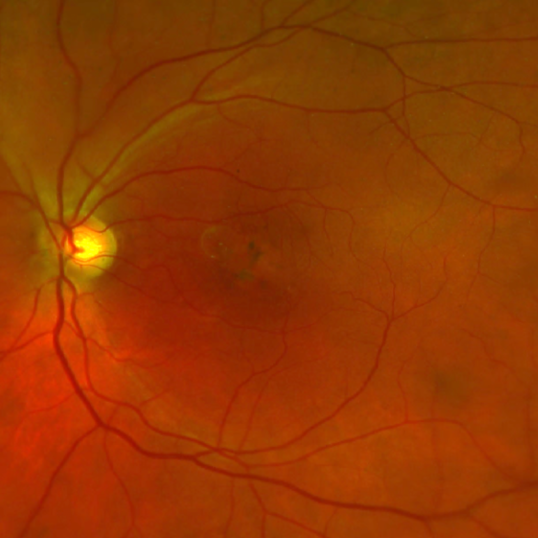
Are you looking for an age-related macular degeneration specialist in Orange County, CA?
At Retina Associates of Orange County, we provide age-related macular degeneration care grounded in 23 years of clinical experience and fellowship training from Moorfields Eye Hospital, Doheny Eye Institute, and Bascom Palmer Eye Institute.
If you’ve been diagnosed with age-related macular degeneration, or your central vision has become blurred or distorted, a retina specialist can identify the type and stage of the disease and recommend treatment.
Each Orange County, CA age-related macular degeneration (AMD) specialist at our practice completed fellowship training in retinal disease, and four of our five physicians are certified by the American Board of Ophthalmology. We have treated macular disease in Orange County for 23 years. Schedule an evaluation with us for a clear diagnosis and a treatment plan based on your retinal imaging.
Age-Related Macular Degeneration Specialist Orange County, CA
An AMD specialist is a retina physician who diagnoses and treats disease of the macula, the small central area of the retina you rely on for reading, driving, and recognizing faces. Optometrists and general ophthalmologists usually detect the first signs. Ongoing care is different. Repeat imaging, injections, and decisions about newer drug therapies typically move to a retina practice.
Age is the strongest risk factor. Census Bureau QuickFacts reports that 18.5 percent of the county’s roughly 3.15 million residents are 65 or older, which is more than 580,000 people. Because early AMD rarely causes symptoms, the decision about when to seek help usually depends on routine eye exams rather than changes a patient notices at home.
Age-Related Macular Degeneration Services We Offer in Orange County, CA
Macular degeneration takes several forms. The right treatment depends on its type, its stage, and what your retinal imaging shows.
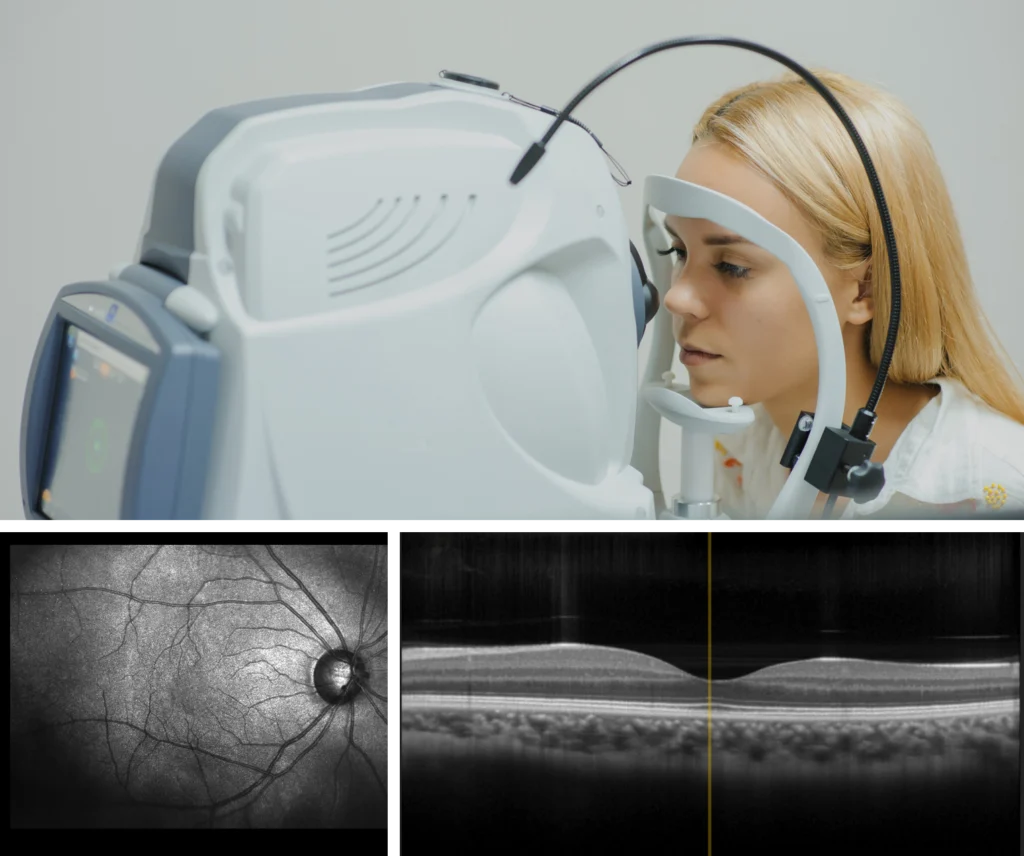
- Retinal imaging and diagnosis. Optical coherence tomography (OCT) produces cross-sectional scans of the macula, showing fluid, thinning, and drusen deposits in fine detail. If we suspect abnormal blood vessel growth, fluorescein angiography may be added. Every future scan is compared against this baseline.
- Dry AMD monitoring. Early and intermediate dry AMD don’t usually require injections. They do require regular exams and repeat scans, along with a review of your smoking history, your diet, and whether an AREDS2 vitamin formula fits your stage.
- Anti-VEGF injections for wet AMD. Eylea HD, Vabysmo, and Lucentis block a protein that drives leaking blood vessels beneath the retina. Injections are given in the office after numbing drops. We adjust the interval between treatments according to how your macula responds.
- Geographic atrophy treatment. Geographic atrophy is the advanced stage of dry AMD. Syfovre and Izervay, both FDA-approved, can slow the growth of atrophic areas but cannot restore vision that has already been lost.
- Macular surgery. Wet AMD occasionally causes a large bleed beneath the macula. In selected patients, vitrectomy surgery can move that blood away from the center of vision. We recommend an operation only when the expected benefit justifies the risks.
- Home vision monitoring. Between appointments, you can check each eye with an Amsler grid. New distortion or a dark patch in your central vision should be reported to our office promptly.
- Second opinions. If you already receive injections at another practice, our physicians can review your imaging and treatment history. Comparing scans over time often shows whether the current plan is working.
- Low vision coordination. When AMD has reduced central vision, we coordinate referrals for magnification devices, lighting changes, and vision rehabilitation.
Why Choose Retina Associates of Orange County for Macular Degeneration Care in Orange County, CA?
Physicians Who Publish and Lecture on AMD
Dr. John C. Hwang has authored numerous papers in the peer-reviewed ophthalmic literature, including work on the treatment of age-related macular degeneration. After medical school at Columbia University, he completed his retina fellowship at the Doheny Eye Institute. He also teaches. Dr. Hwang is a Clinical Assistant Professor of Ophthalmology and an adjunct faculty member at the USC Eye Institute.
Dr. John S. Lean studied medicine at Oxford University, then completed both his ophthalmology residency and his vitreoretinal fellowship at Moorfields Eye Hospital in London. Through numerous visiting professorships, he has lectured on macular degeneration around the world. He is a member of the Macula Society and the Retina Society.
Clinical Research and Local Roots
Through our research institute, we take part in clinical trials. Eligible patients may be considered for studies of investigational AMD therapies. Macular degeneration can also occur alongside other retinal conditions. Diabetic eye disease is one example. Every retina specialist in Orange County, CA at our practice treats the full range of retinal disease, so patients who also need a diabetes retina specialist can receive that care here instead of at a second office. Our practice has served Orange County for 23 years.
Understanding Age-Related Macular Degeneration Care
Conditions We Treat and Treatment Options
AMD develops when aging damages the macula. The National Eye Institute estimates that about 11 million people in the United States have the disease. Most have the dry form, in which the macula thins slowly over years. A smaller number develop the wet form, where abnormal vessels grow beneath the retina and leak fluid or blood, usually causing faster vision loss than the dry form. But not every change in the aging retina signals AMD. A dilated examination separates normal findings from early disease.
- Dry AMD. In the early and intermediate stages, small yellow deposits called drusen collect beneath the retina. Results from the AREDS2 clinical trials show that a specific vitamin and mineral formula can slow progression from intermediate to advanced disease.
- Wet AMD. Anti-VEGF injections are the standard treatment and can stabilize vision in many patients.
- Geographic atrophy. Complement inhibitor injections slow the expansion of damaged areas in late dry AMD.
- Bleeding beneath the macula. When a large hemorrhage forms, surgery may be combined with injections.
- Central vision loss from late AMD. Magnifiers, specialized lighting, and other low vision tools help patients keep reading and managing daily tasks.
What Should You Expect from an AMD Evaluation?
- We measure your visual acuity, and you may be asked to view an Amsler grid with each eye.
- Dilating drops widen the pupils. Vision stays blurry and sensitive to light for several hours, so plan for someone else to drive.
- OCT imaging takes a few seconds per eye and involves no contact with the eye.
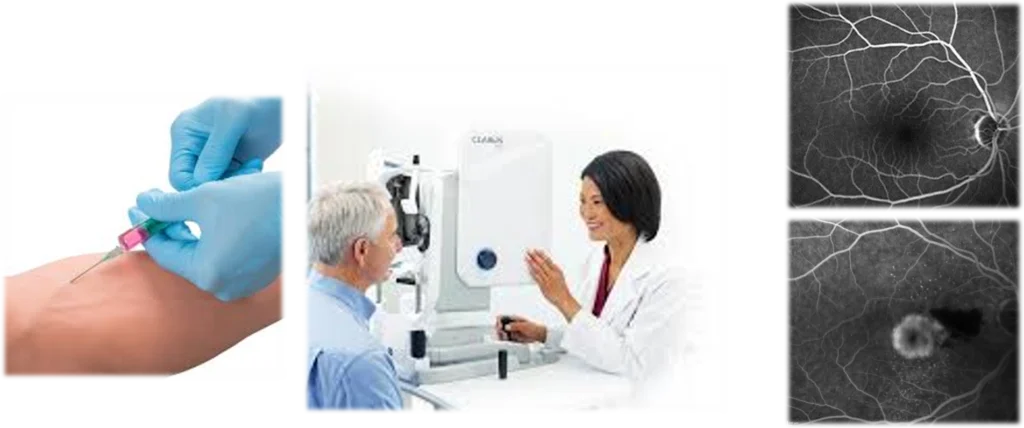
- In some cases, we add fluorescein angiography. A dye is injected into a vein in the arm, and photographs trace its path through the retinal vessels.
- Your physician reviews the images with you and explains the findings before you leave.
What Is the Typical Treatment Timeline?
- The first appointment establishes the diagnosis, the stage of disease, and a baseline set of images.
- Patients with dry AMD return for exams at intervals based on their stage and risk of progression.
- Wet AMD treatment usually begins with injections spaced about four weeks apart.
- Once OCT shows that the macula is dry, the time between injections is often lengthened gradually. This approach is known as treat-and-extend.
- AMD is a chronic condition, and regular follow-up remains part of protecting your vision for as long as the disease is present.
Timelines vary with the type of AMD, how the eye responds to treatment, and other individual factors. Your physician will set a follow-up schedule after reviewing your imaging.
What Should You Bring to Your First Visit?
- Your insurance card and photo ID are needed at check-in.
- Bring a list of your current medications and supplements, including any eye vitamins.
- Records or retinal images from previous eye doctors help us measure change over time.
- Completing the patient forms in advance shortens your wait.
A first visit takes longer than a routine eye appointment, mostly because of dilation and imaging. You’ll leave knowing your diagnosis and the next step in your care.
What Are Some Important California Age-Related Macular Degeneration Resources?
State and federal agencies publish reliable information on physician licensing, AMD, and support for people living with vision loss.
- Physician licensing. The Medical Board of California licenses physicians and surgeons in the state. It offers a license search for confirming a doctor’s status.
- Patient education. The National Library of Medicine maintains a MedlinePlus AMD overview that explains the wet and dry forms in plain language.
- Vision rehabilitation. The California Department of Rehabilitation provides Blind Field Services for residents with significant vision loss. Its Older Individuals who are Blind program serves Californians age 55 and older.
- Research updates. The National Eye Institute publishes findings from AMD studies and lists active clinical trials.
These resources provide general information and are not a substitute for an examination by a retina physician.
Contact Retina Associates of Orange County
Contact us to schedule an evaluation with a macular degeneration specialist in Orange County. Some of our patients have just learned they have drusen or early AMD. Others are receiving injections elsewhere and want a second opinion. In both cases, the first visit centers on a dilated exam and a careful review of your imaging. Please bring any prior eye records or retinal images. If your vision has changed recently, tell our staff about it when you schedule, and we’ll arrange your appointment accordingly.
Age-Related Macular Degeneration (AMD)
Age-related macular degeneration (AMD) is a disease of aging that is:
- Common
- Gradual
- Progressive
- Painless
- Characterized by deterioration of the macula, a small area in the center of the retina
When unmonitored and untreated, AMD results in vision loss, especially for daily tasks like driving, reading, etc. With appropriate monitoring and timely treatment, most patients can maintain vision for years to come.
Peripheral vision is usually not affected by macular degeneration and often, this illness will go unnoticed until a patient engages in a task such as driving or reading, in which central vision is crucial. As the term “degeneration” implies, the illness becomes more noticeable over time and tends to get worse with or without treatment. Macular degeneration typically affects adults over 65 and the main risk factors for the disease are increasing age and genetics (family history of macular degeneration). Smoking, high cholesterol and hypertension are also risk factors. This disease does not cause total blindness and most macular degeneration patients can see well enough to care for themselves.
The Macula
The macula is the center region of the retina. The macula is responsible for high detail vision, central vision, reading, etc. The rest of the retina is responsible for peripheral vision. AMD affects the macula, and in turn, results in decreased vision for tasks like reading, driving, recognizing faces, etc.

Symptoms of Macular Degeneration
Being aware of the common signs of AMD is necessary so that you can seek treatment before the disease progresses. Patients who are diagnosed with age related macular degeneration may experience one or more symptoms, such as the following:
- Wave or straight lines
- Dark spots in their vision
- Blurry or distorted vision
Because symptoms of macular degeneration often occurs in one eye before the other, a patient may only notice the symptoms upon covering one of their eyes. To test for Macular degeneration, your eye care provider may use an Amsler grid macular degeneration test (a test that can also be done at home by the patient to monitor symptoms).
Individuals who are older in age, female, Caucasian, have a history of smoking, high cholesterol, or high blood pressure, or who have a family history of AMD may be at a higher risk of AMD.
Macular degeneration is a serious eye condition that should not be ignored. If you suspect even minor symptoms, you should call an eye doctor who is familiar with macular degeneration and treatments for it. Describe any symptoms that you see to an eye doctor and they will conduct additional tests if necessary. They will do a complete exam to see what symptoms you have and treatments for your condition.
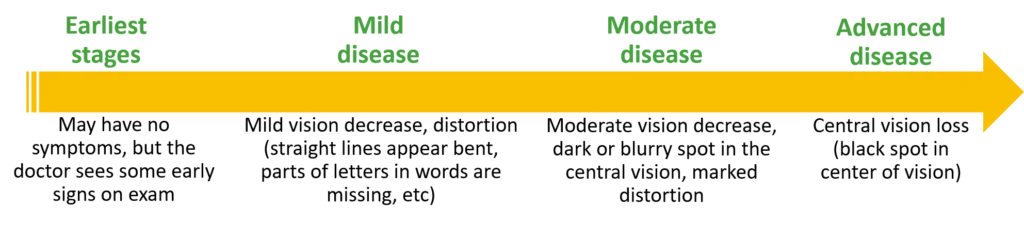
Types of Macular Degeneration
Little is known about the causes of macular degeneration, except that it pertains to aging in specific retinal layers. Macular degeneration occurs in two forms: exudative (“wet”) and atrophic (“dry”). Most cases, 90% in fact, are dry– the less severe form.
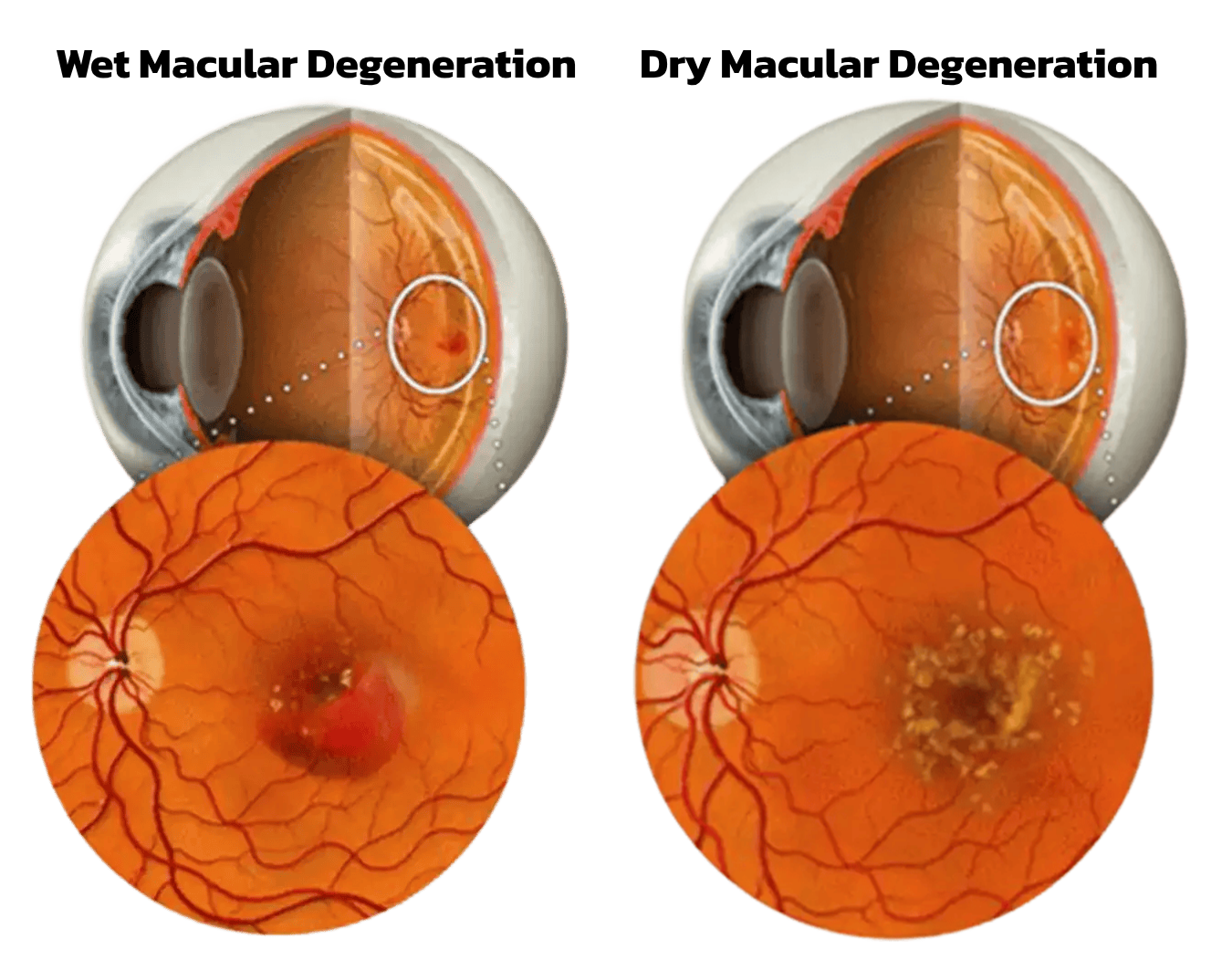
- Dry Age-Related Macular Degeneration (Dry AMD or Atrophic AMD)
Dry AMD is a milder, earlier, more common form of AMD. Age-related deposits accumulate in the retina, causing mild to moderate vision symptoms. In late stages, tissue loss (called “atrophy” or “geographic atrophy”) can occur, resulting in severe vision loss. The dry form can convert to the wet form at any time.
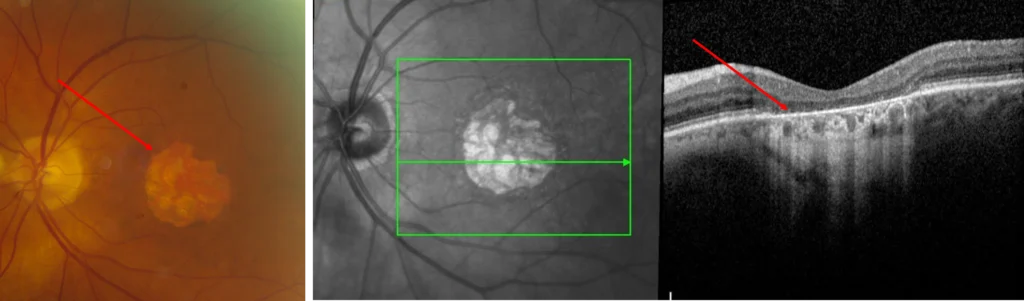
- Wet Age-Related Macular Degeneration (Wet AMD or Exudative AMD)
Wet AMD has all the features of dry AMD, as well as the creation of new blood vessels that grow under and/or into the retina. This abnormal blood vessel growth is called “choroidal neovascularization.” The abnormal blood vessels leak fluid or blood into the retina, thus “wet” AMD Vision decrease may occur gradually or it can occur suddenly, with potentially vision loss
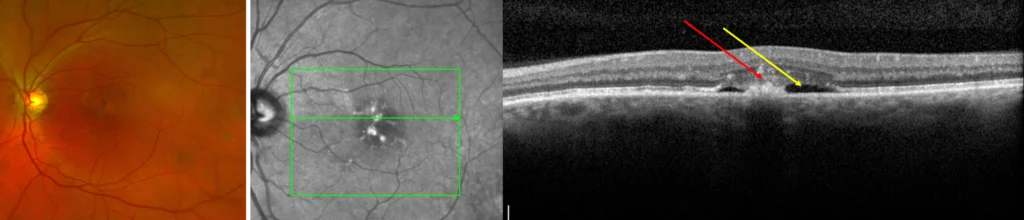
Treatment from an AMD Specialist
Diagnosing AMD
A doctor may use multiple methods in order to diagnose AMD, such as a dilated retinal examination or an optical coherence tomography (OCT) scan. An OCT scan is a painless photograph that provides a cross-sectional scan through the macula so that microscopic details of the macula can be discerned.
In some patients, a fluorescein angiography may be used. In this procedure, a dye is injected into the arm, from which to travels through the blood to the eye. Photographs are taken of the eye which map out all the blood vessels and blood flow in the retina. This test identifies areas of blood flow loss as well as areas of new blood vessel grown (neovascularization).
Treating AMD
As life expectancy increases macular degeneration is becoming a greater health concern and more medical researchers are devoting more energy to treating this illness. Unfortunately, macular degeneration has few treatment options. However, the Age-Related Eye Disease Study (AREDS 2) shows that anti-oxidants and carotenoids such as Vitamins C, Vitamin E, Zeaxanthin, Lutein and minerals such as copper and zinc, help slow the disease’s progression when it reaches the intermediate phase (AREDS 2 eye vitamin).
- Treating Dry AMD
Patients with dry AMD are monitored for conversion to wet AMD (for which there is treatment). AREDS2 vitamins (over the counter) may reduce progression of dry AMD and thus may be recommended. An “Amsler grid” is provided to allow patients to monitor for subtle vision changes between appointments. If there is geographic atrophy present, treatments are now available to slow down the progression of geographic atrophy (Syfovre, Izervay).
- Treating Wet AMD
For wet Macular degeneration, laser photocoagulation or photodynamic therapy (PDT) may be an option. In this particular treatment, an intense light is used to focus on and close areas of leakage that are linked to wet macular degeneration. Most patients are not a candidate for laser or PDT unless the leakage is outside the center of the macula or the leakage is unresponsive to the standard medicine injections (discussed momentarily). In cases where the leakage is within the center of vision, patients may consider another treatment. One approach may be the new class of drugs known as anti-VEGF (anti vascular endothelial growth factor) that are injected into the vitreous cavity. These drugs include:
-
Wet: Lucentis, Avastin, Eylea, Eylea HD, Pavblu, Vabysmo,
-
Dry (Geographic Atrophy): Syfovre, Izervay
The injections are given into the eye (intravitreal injections) in the office, after drops are given to numb and clean the ocular surface. The medications last several weeks in the eye. Some patients require injections every month to control the disease, while others require injections less often, and yet others are able to eventually stop injections and monitor for recurrence. The treatment is individualized to each patient’s disease and response to treatment. There are new drugs in the research pipeline that may last longer.
Injecting these medicines into the center of the eye helps reduce the prominence of actively growing blood vessels in the outer retina. This in turn can reduce the risk of further vision loss and in some patients, actually improve their vision. All forms of wet macular degeneration treatment are most effective when applied early on in the disease process. The leakage is easiest to target when localized, as in the early stages of macular degeneration. Therefore early diagnosis is key to managing and preventing the progression of this disease.
Contact Our Age-Related Macular Degeneration (AMD) Specialist Orange County Today
If you feel you have taken the Amsler grid test and are concerned about your results, or have other reasons to suspect you are suffering from macular degeneration, contact Retina Associates of Orange County today. Retina Associates of Orange County‘s qualified retinal specialists can help restore your sight.
As a Age-Related Macular Degeneration (AMD) Specialist Orange County who has experience treating age related macular degeneration AMD can discuss your situation and your treatment with you. Identifying the early signs and symptoms of AMD is essential so that it can be managed before it progresses to a more severe stage. The more it progresses, the more difficult it will be to treat.
Common Myths About Senior Vision Care
An ophthalmologist can help with Age-Related Macular Degeneration (AMD), but many misconceptions about senior vision care still persist. At Retina Associates of Orange County, we pride ourselves on our skilled team of ophthalmologists, and it’s earned us national recognition. We’re devoted to advancing patient care and retinal treatment technologies, but it all starts with keeping our patients informed. Read on to debunk some common myths, and contact us today to get started with your treatment.
Myth 1: Vision Loss Is An Inevitable Part Of Aging
While changes in vision are common with age, significant vision loss is not a normal part of aging. Many conditions that affect seniors’ vision, such as cataracts and changes in the retina, can often be treated or managed. Regular eye exams are crucial to diagnosing issues early when they are most treatable.
Myth 2: Reading In Low Light Worsens Your Vision
Many believe that reading in dim light can exacerbate vision problems. However, while reading in low light might strain your eyes and cause temporary discomfort, it does not cause lasting damage to your vision. It’s always more comfortable to read with sufficient lighting to avoid eye strain.
Myth 3: There’s No Need For Regular Eye Exams If You See Well
Even if you have not noticed any problems with your vision, regular eye exams are essential. Many eye diseases that commonly affect seniors, such as glaucoma and diabetic eye disease, can progress without noticeable symptoms in their early stages. Regular check-ups ensure that any changes in eye health are caught early.
Myth 4: Eye Exercises Can Prevent Vision Decline
There is no scientific evidence to support the idea that eye exercises can prevent or reduce vision decline related to age. While exercises can help manage specific eye conditions, they cannot stop the natural changes in the eye that occur with aging.
Myth 5: Cataract Surgery Is Dangerous And Ineffective
Cataract surgery is one of the most common and successful medical procedures performed today. It is safe and effective, with a high success rate. Modern techniques and technologies have made cataract surgery a routine procedure that significantly improves vision in the vast majority of cases.
Myth 6: Dry Eyes Are Just A Minor Annoyance
While dry eyes can be more common as people age and might seem like just a nuisance, they can seriously affect vision and quality of life. Dry eyes can lead to more severe conditions if not treated properly, including infections and damage to the eye surface. It’s important to consult with an eye care professional if you regularly experience dry eyes.
Myth 7: It’s Too Late To Improve Vision Once You Are Older
Many seniors believe that once their vision starts declining, nothing can be done to improve it. However, with the right treatment and interventions, it is possible to restore or enhance vision – and in the case of age-related macular degeneration, you can take important steps to slow down your vision loss. Technologies in eyeglasses and contact lenses, as well as surgical options, can significantly improve vision quality even later in life.
Myth 8: Wearing Glasses Makes Your Eyesight Worse Over Time
Wearing the correct prescription glasses or contact lenses helps you see better but does not make your natural eyesight worse. Some people may feel more dependent on their corrective lenses as they wear them regularly, but this is because they become accustomed to clear vision with their glasses or contacts.
Contact Us Today
At Retina Associates of Orange County, we believe in empowering our patients with accurate information and the best eye care services. If you have concerns about your vision or have been avoiding eye care based on these or other myths, we encourage you to schedule an appointment with us. Get in touch with our team today, and see how we can help you with age-related macular degeneration.
Newport Beach Macular Degeneration Doctor | 5 Facts About Macular Degeneration


